What Is Ambient Temp on a Meat Thermometer?
Ambient temp on a meat thermometer is the temperature of the air around the meat, not the meat itself. On a grill, smoker or oven it tells you how hot the cooking chamber is, separate from the internal reading inside the food.
On this page (9 sections)
- What is ambient temp on a meat thermometer measuring?
- Why do thermometers show both ambient and internal readings?
- How is ambient temp different from the temperature you set?
- What does ambient temp tell you about your fire?
- How do ambient and internal temps work together?
- Which thermometers show true ambient temperature?
- Where should the ambient sensor sit in the chamber?
- How do you use the reading to hold a steady cook?
- What does ambient temp on a meat thermometer change for your cook?
Ambient temp on a meat thermometer is the temperature of the air around your food, read by a sensor that sits outside the meat. It tells you how hot the grill, smoker or oven chamber is, while the internal reading tells you how done the meat is.
Those two numbers answer different questions, and understanding the split is the key to steady cooks. There's more to it than that, so here's what ambient temp on a meat thermometer actually measures and how to use it when you grill or smoke.
What is ambient temp on a meat thermometer measuring?
It measures the air in the cooking chamber, not the surface of the grate and not the inside of the meat. The sensor sits in the open space around the food, so it reads the heat that will travel through the meat.
That heat is what drives the cook. Heat moves from the hot air into the colder meat, and the bigger the gap between the two, the faster the internal temperature climbs.
A probe with an ambient sensor has a part that stays in the airflow, usually the tip or the ceramic end just outside the meat. Grills and smokers run far hotter than a finished roast, so the ambient sensor is built for much higher heat than the internal one.
The internal sensor does the opposite job. It reads the center of the meat and tells you when a brisket or a chicken breast hits its target.
Neither reading alone tells the full story.
Why do thermometers show both ambient and internal readings?
Because cooking is about two temperatures at once: how hot the chamber is and how close the meat is to done. A thermometer that reports both gives you a way to spot a problem before the meat is ruined.
If the chamber is running cold, the meat stalls and takes longer than planned. If it's running hot, the outside can burn before the center is safe.
Seeing both numbers on one display lets you react. You can open a vent, add fuel, or move the meat to a cooler zone while the internal reading still has room to climb.
Built-in chamber sensors also spare you from clipping a second wired probe to the grate. One wireless probe can carry the internal and ambient readings at the same time.
How is ambient temp different from the temperature you set?
Your set point is what you want the chamber to be, while the ambient reading is what the chamber actually is right now. The two drift apart in normal use.
Pellets and charcoal don't burn at a perfectly even pace. The grill cycles, the outside air cools the walls, and every lid opening dumps heat.
So a 225°F set point might read 230°F one minute and 218°F the next. That swing is normal, and the average is what matters over a long smoke.
On an oven, the dial is even less precise. Ovens cycle their elements on and off, so the air temperature rises and falls around the setting.
The ambient reading shows the real number the food is cooking in.
What does ambient temp tell you about your fire?
It tells you whether your heat source is doing its job at a glance. A pit that won't climb past 200°F usually needs more fuel, more airflow, or shelter from wind.
A pit that shoots past your target usually needs less fuel or a closed vent. Watching ambient lets you catch a runaway fire early, before the meat's outside turns to charcoal.
For a long smoke, a steady ambient reading is the sign of a well-managed fire. If the number wanders by 30°F in both directions, the cook will take longer and need more attention.
The chamber reading also tells you when the grill has recovered after you opened the lid. Give it a few minutes to return to the set point before you judge the cook.
How do ambient and internal temps work together?
Together they show how fast heat is moving into the meat. A big gap between ambient and internal means a fast rise; a small gap means the meat is nearly done or the fire is fading.
That gap explains the stall. At some point the moisture on the meat's surface evaporates and cools it, so the internal temp stops climbing even though the chamber is hot.
Knowing the chamber is fine lets you wait out the stall instead of cranking the heat. If ambient has dropped at the same time, though, the fire is your problem, not the meat.
Some cooks wrap the meat at the stall to push through it. The chamber reading still matters then, because a wrapped piece needs steady heat to finish.
Our meat thermometer temperature chart lists the finish temp for each cut, so you can compare it against what the chamber is doing.
Which thermometers show true ambient temperature?
Wireless probes with a built-in chamber sensor, and multi-probe units with a separate ambient probe, both show it. The choice comes down to how many readings you want and how you like to cook.
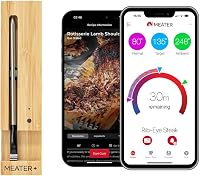
The MEATER Pro carries internal and ambient in one wireless probe. The brand says it's rated to a 1000°F max ambient temp, which covers open-flame cooking and searing without pulling the probe.
Its 5 internal sensors find the lowest internal temperature, and the app runs the monitoring. The dishwasher-safe body and fast charging keep it simple between cooks.
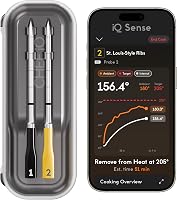
The ThermoMaven WiFi 2-Probe tracks two dishes plus the ambient grill or oven heat at once. ThermoMaven says the probes read internal up to 221°F and ambient up to 752°F.
Its base shows real-time readings without a phone, and the brand says the sensors are NIST-certified to ±0.5°F. That matters if you want the base to run the show.
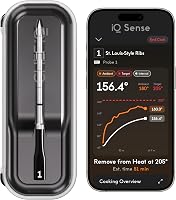
The TempPro TempSpike 1000FT 2-Probe uses RF instead of Bluetooth and needs no app or sign-up. It carries 2 probes with 2 BBQ temp readings on one large screen.
TempPro warns not to put the bare stainless tip in the ambient airflow. The brand says the zirconia ceramic end handles smoker heat up to 1050°F, so position the probe as directed.
Where should the ambient sensor sit in the chamber?
Put it near the meat, at grate level, where the food is actually cooking. Heat stratifies in a closed chamber, so the reading at the lid can be far hotter than the reading below the grate.
Keep the sensor out of direct flame and away from the hot wall on the firebox side. A spot in the open airflow beside the meat gives the most useful number.
Don't rest the sensor flat against the grates. Contact with hot metal reads the metal, not the air.
On a smoker, a spot between the meat and the far wall is a common choice. On a kettle, keep it off the coals and out of the path of the lid vent.
Position matters most in an oven too. The center rack reads true, while the back corner runs hotter.
How do you use the reading to hold a steady cook?
Watch the average, not the bump. A chamber that holds near your set point over 20 or 30 minutes is doing its job, even if it moves a few degrees minute to minute.
Adjust one thing at a time. Close a vent a little, add a chimney of lit coals, or nudge the oven dial, then wait before changing anything again.
Don't chase swings with big corrections. A panicked lid opening drops the chamber temp and restarts the cycle.
If the ambient reading and the meat's internal probe disagree wildly with what you expect, check the placement first. A probe touching bone or sitting in a cold spot reads low.
For an oven cook, a wireless probe that can take the heat is the easiest answer. Our oven safe meat thermometer picks cover probes rated for oven use.
If you'd rather watch the numbers on your phone, our meat thermometer with app guide covers the models that log a full cook. Smoker owners can compare range and battery life in our bluetooth meat thermometer for smoker roundup.
What does ambient temp on a meat thermometer change for your cook?
It changes how you manage the fire and when you trust the meat reading. Once you know what ambient temp on a meat thermometer means, you can tell a stalled brisket from a fading fire, and a hot oven from a slow one.
The chamber reading is your control, and the internal reading is your finish line. Use them together and the guesswork goes away.
For most cooks, the MEATER Pro's single probe with a high ambient rating covers grill, oven and smoker in one piece of kit. The ThermoMaven WiFi 2-Probe suits anyone cooking two dishes plus the chamber at once, and the TempPro TempSpike works for readers who want a big screen and no app.
Frequently asked questions
Does ambient temperature affect cooking time?
Yes, a lower ambient temp slows the cook because less heat reaches the surface of the meat. A higher one speeds it up and can char the outside before the center is done.
Watching both numbers helps you adjust the vents or the oven setting.
Can I leave a probe in the grill for a long smoke?
Only if the probe's outside sensor is rated for the heat it will see. Check the top ambient rating and keep the probe's body out of direct flame.
A probe rated lower than your pit temperature can be ruined on a long cook.
Why does ambient temp swing on a pellet grill?
Pellet grills cycle their auger and fan, so the chamber temperature rises and falls a little around your set point. Wind, outside air, and opening the lid add to the swing.
A steady average matters more than every small dip.
Is ambient temp the same as pit temperature?
Yes, in barbecue terms they mean the same thing: the air temperature inside the cooking chamber. Some thermometers call it pit temp, some call it ambient, and some call it the grill or oven reading.
All three describe the heat around the food.
Do I need a second probe for ambient?
Not always. A wireless probe with a built-in ambient sensor covers both readings in one.
Two-probe units let you track one piece of meat and the chamber separately, which helps when you cook different cuts at once.