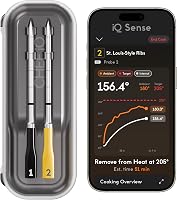
Are CHEF iQ Thermometer Probes Dishwasher Safe?
Yes. CHEF iQ says its Sense probes are waterproof and dishwasher safe. You can lay them in the top rack or hand wash them, as long as you skip harsh scrubbers and let them dry fully before the next cook.
On this page (9 sections)
- Are CHEF iQ thermometer probes dishwasher safe?
- What does CHEF iQ say about washing the probes?
- How do you wash a CHEF iQ probe without damaging it?
- Can the dishwasher hurt the temperature sensors?
- Should you hand wash or use the dishwasher?
- Why does drying matter more than washing?
- How should you store CHEF iQ probes between cooks?
- Which CHEF iQ Sense set fits your cooking?
- What else should you know about cleaning a CHEF iQ probe?
Yes. CHEF iQ says its Sense probes are waterproof and dishwasher safe.
You can lay them in the top rack or hand wash them, as long as you skip harsh scrubbers and let them dry fully before the next cook.
That covers the short answer to whether the CHEF iQ thermometer is dishwasher safe. The rest is about doing it without hurting the thin tip or the sensors.
A probe is a cooking tool you rely on for exact doneness, so a few cleaning habits keep its readings honest for years.
Are CHEF iQ thermometer probes dishwasher safe?
Yes. CHEF iQ lists its Sense probes as dishwasher safe and waterproof.
The cleaning instructions are part of the design, not an afterthought.
That means the probes were built to handle a normal machine cycle and still work.
The probes are stainless steel with an ultra-thin shaft. That thin design is what keeps proteins intact and juices inside, but it's also the part you should treat with care.
A dishwasher won't bend the shaft on its own, but a crowded rack can.
So the safe routine is simple. Load the probes in the top rack, keep them away from heavy pans and sharp cutlery, and let the cycle do the work.
You don't need to scrub or soak them first. The next section covers the details that protect the tip.
What does CHEF iQ say about washing the probes?
CHEF iQ markets the probes as easy to clean, waterproof and dishwasher safe. The 2-Probe and 4-Probe Sense sets both carry that care instruction.
The single-probe Sense thermometer is the outlier, so read the next paragraph before you toss it in.
The cleaning details line up across the Sense 2-Probe and Sense 4-Probe. Both say the probes are waterproof and dishwasher safe.
The single-probe Sense Smart Wireless Meat Thermometer calls for hand washing only, so follow that for its probe.
This matters because the models look similar. If you own more than one, check which probe you're holding before you load the rack.
When in doubt, hand washing is always safe for every CHEF iQ probe.
How do you wash a CHEF iQ probe without damaging it?
Wash the probe with warm soapy water or a top-rack dishwasher cycle, then dry it fully. The cleaning method is easy.
The handling is where people go wrong.
Start with a soft cloth or sponge and a little dish soap. Wipe the full stainless shaft from the tip up to where it meets the hub.
Rinse under running water without blasting the seam.
If you use the dishwasher, put the probe in the top rack and secure it so it doesn't bounce. Avoid a cycle packed with cast iron or chef's knives.
After washing, shake off the water and let the probe air dry in the open.
Skip steel wool, scouring pads and abrasive cleansers. They can scratch the stainless and wear the thin tip.
A scratched shaft still reads temperature, but it collects more grease over time.
Can the dishwasher hurt the temperature sensors?
No. Normal dishwasher heat is far below what the probes are rated for.
The Gen3 multi-probe sets are rated to 1000°F and the single-probe model to 752°F, both above any wash or dry cycle.
The sensors are designed for high heat.
The real risk isn't temperature. It's moisture getting into the electronics or the connection point.
Water pressure aimed at the seam, or a long soak, is more likely to cause trouble than the wash cycle itself.
Handle the probe by the hub end, not the tip. The ultra-thin shaft is what makes the reading fast and the meat intact, so don't use it as a poker or lever.
Treat it like a delicate instrument and the dishwasher stays a safe option.
Should you hand wash or use the dishwasher?
Hand washing wins for a quick cleanup between cooks, while the dishwasher suits a full load after a long cook day. Both methods are safe for the Sense 2-Probe and 4-Probe.
Pick based on time and how much grease is on the probe.
A hand wash takes under a minute. Warm water, a drop of soap and a soft cloth remove most juices and rubs.
It's the better choice when you're cooking two proteins back to back and need the probe again soon.
The dishwasher is the better choice when the probe has been in a long brisket cook and you have a full load anyway. It also cleans the hard-to-reach spots along the shaft.
Just keep the probe out of the drying cycle if your machine gets very hot on the bottom rack.
Why does drying matter more than washing?
A fully dry probe reads accurately and lasts longer. Moisture left on the shaft or near the seam can dull the tip over time and cause odd readings.
Drying is the step people skip.
After washing, shake the probe and let it air dry in the open. Don't put it straight back into the hub while wet.
A dry hub keeps the charging contacts clean and the electronics safe.
Wipe the hub itself with a dry or barely damp cloth. Don't run the hub through the dishwasher.
Only the probes are dishwasher safe. Keeping that line clear protects the part that does the charging and sends the readings.
How should you store CHEF iQ probes between cooks?
Store the probes dry, in the hub or a clean drawer, with the tips protected. Good storage keeps the sensors clean and stops the thin shaft from getting bent.
The Sense hubs charge the probes, so the hub is a natural home. The 2-Probe hub charges both probes at once.
The 4-Probe hub handles all four. Store them there once they're dry and you'll always know where they are.
If you keep a spare probe, store it in a pouch or the original slot to protect the tip.
Keep the tip away from hard metal and sharp drawer edges. A small pouch or the original slot works well.
Which CHEF iQ Sense set fits your cooking?
Both multi-probe Sense sets use dishwasher-safe probes; the single-probe model requires hand washing. Pick based on how many proteins you cook at once.
That's the real difference between the sets.
The CHEF iQ Sense 2-Probe is the middle option for most households. It runs two probes at once, so you can cook a steak and chicken together.
The hub charges both probes at the same time. It's a sensible step up without paying for probes you won't use.
The CHEF iQ Sense 4-Probe suits big cooks. Four probes let you track four different proteins or four steaks to different donenesses.
Both multi-probe sets share the same dishwasher-safe probe design, so cleanup works the same way.
The single-probe CHEF iQ Sense Smart Wireless Meat Thermometer covers the basics for one protein at a time. Its care instructions call for hand washing, so keep it out of the machine.
If you want the dishwasher convenience across the whole set, choose one of the multi-probe models.
Our comparison of the CHEF iQ vs ThermoMaven covers how the two brands handle cleanup and daily use. If you're weighing probe counts, the 4 probe meat thermometer roundup lays out the options.
And if this is your first wireless probe, the wireless meat thermometer guide walks through setup and use.
What else should you know about cleaning a CHEF iQ probe?
Clean the probe after every cook, not just when it looks dirty. Dried juices and rubs bake onto the shaft and can affect the reading over time.
A quick wash keeps the sensor clear.
Don't submerge the hub or the charging case. Only the probes are dishwasher safe.
Wipe the hub with a damp cloth and let it dry before charging.
Don't put the probe in the dishwasher while it's still hot from the grill. Let it cool first, then wash it.
Sudden temperature swings are hard on any metal tool.
If a reading looks wrong, clean and dry the tip before assuming the sensor failed. A film of grease on the tip is a common cause of odd numbers.
A clean, dry probe usually reads correctly again.
To sum up: the CHEF iQ thermometer is dishwasher safe for its Sense 2-Probe and 4-Probe models. Use the top rack, skip harsh scrubbers, dry fully and store it in the hub.
That routine keeps the probe clean and accurate for every cook. If you want more reach from your setup, read about wireless meat thermometer range before you plan your next cook.
Frequently asked questions
Do you still need to wash the probe by hand?
Not always. A dishwasher cycle cleans the probe, but for a quick wipe between two close cooks, warm soapy water and a soft cloth are faster.
Either way, dry the probe fully before it goes back in the hub.
Should you wash the probe tip or the handle end?
Clean the whole stainless steel shaft, since grease and juices collect along it. The tip needs the most attention because it sits deepest in the meat.
Rinse the spot where the probe meets the hub without soaking it under pressure.
Can hot dishwasher water damage the temperature sensors?
The probes are rated to handle far more heat than a dishwasher cycle reaches. The Gen3 multi-probe sets are rated to 1000°F and the single-probe model to 752°F, both above dishwasher heat.
Damage comes from rough handling or soaking the electronics, not the water heat.
How should you store a probe after it dries?
Let it air dry completely, then keep it in the hub or a dry drawer. Don't let the tip rest against a hard surface.
A dry spot protects the sensor and keeps the next reading accurate.