Typhur Sync Gold vs MEATER Pro: Which to Buy? (November 2026)
Pick the Typhur Sync Gold Gen2 if you want the stronger signal and more sensors for barbecue and kamado cooking. The Typhur Sync Gold vs MEATER Pro choice turns on signal range, probe count and heat limits rather than a small accuracy gap.
On this page (9 sections)
- Typhur Sync Gold vs MEATER Pro at a glance
- Why the wireless signal decides this matchup
- Which one reads better without a phone?
- Sensors, accuracy and response time
- Heat limits and cleaning
- Setup and app control
- Who should buy the Typhur Sync Gold Gen2
- Who should look at MEATER Pro or a second probe
- Verdict: which smart probe wins
Pick the Typhur Sync Gold Gen2 if you want the stronger signal and more sensors for barbecue and kamado cooking. The Typhur Sync Gold vs MEATER Pro choice turns on signal range, probe count and heat limits rather than a small accuracy gap.
Both are wireless probes built for people who are tired of wires running out of the smoker. The Sync Gold Gen2 is the one to beat here: Sub-1 GHz wireless, a base that shows readings, and probes rated to 752 F.
The MEATER Pro is the top of the MEATER line and the natural rival.

 Best for quick spot checks
Maverick Pro-Temp Digital Meat Thermometer PT-100BBQ
Typhur Sync Gold vs MEATER Pro at a glance
The Sync Gold Gen2 wins on signal strength and sensor count, while the MEATER line keeps a simpler app-first workflow. The table below covers the points that change the buying choice.
| Point | Typhur Sync Gold Gen2 | MEATER Pro |
|---|---|---|
| Wireless tech | Sub-1 GHz | Bluetooth and Wi-Fi in the MEATER app |
| Sensors per probe | 5 internal plus 1 ambient | One probe, app driven |
| Accuracy | Plus or minus 0.5 F | Core and ambient readings in the app |
| Response time | 0.5 seconds | Fast readings for the app |
| Read without a phone | LCD base | The MEATER app |
| Probe heat | 752 F | Top of the MEATER range |
| Two cuts at once | Buy the Dual kit | The MEATER Pro Duo |
The Gen2 is a system with a base, not just a probe. That base is the single biggest reason many cooks pick it over a phone-only setup.
It ships as a kit rather than a loose probe. In the box you get the device base, one meat probe, a charging cable and a user manual, and the whole set weighs 5.92 ounces and runs 6.7 inches long.
That compact footprint matters on a crowded prep table. The base can sit next to the smoker while the probe stays inside it.
The Dual, by contrast, adds a second probe and a hard case, so the kit grows with the cook. Choose between them by counting how many pieces of meat you track on a typical weekend.
Why the wireless signal decides this matchup
Sub-1 GHz is the Sync Gold's headline feature, and it is the reason it handles closed cookers better. The signal passes through walls, kamado grills, smokers and Dutch ovens, which is where Bluetooth setups often struggle.
Typhur says the Sub-1 GHz tech gives a signal 10 times stronger than standard Bluetooth wireless thermometers. You do not need to believe the number to see the practical effect: meat keeps its temperature link while the lid is shut.
Typhur also quotes a range of up to 3000 feet in its product material. Treat that as a best-case number in open air, but it frames the design goal: a link that survives distance and obstacles rather than one that quits at the patio door.
That matters on a long cook. A pork shoulder or brisket sits in a smoker for hours, and you want the graph to keep drawing without a walk to the cooker.
The app adds Wi-Fi connectivity too, so you can check the cook from another room when the signal is working through your home network. Sub-1 GHz carries the probe-to-base hop; the Wi-Fi side then carries the base-to-phone hop.
That two-step path is worth understanding. The base is the receiver, and the phone reaches the base over your home network, which is why the setup keeps working when you leave Bluetooth range.
Which one reads better without a phone?
The Sync Gold Gen2 has a clear edge for anyone who does not want to open an app every time. Its base shows readings and lets you adjust target temperatures right on the device.
The base uses an LCD, so the numbers are legible in normal kitchen light without a phone screen fired up. You can set a target, walk away, and come back to a live reading.
The MEATER Pro leans on the MEATER app for the full picture. That is fine if you cook with your phone beside you, but a glance at the base is faster when both hands are full of tongs.
For griddle and quick steak cooks, a standalone display is genuinely handy. That is the pattern behind the Typhur Sync Gold review, which can be read as a vote for base-first control.
If you like seeing the last few minutes tick down on a counter display while you prep sides, the Gen2 fits. If you happily run everything from one app, the MEATER Pro does the same job with fewer parts.
One small point in the Gen2's favor: the base does the job even if your phone is charging in another room. A dead phone battery delays an app-first cook, but it cannot blank a base display.
Sensors, accuracy and response time
The Gen2 packs more sensors into each probe, and that helps it forecast doneness. Each probe has five internal sensors plus an ambient tip sensor, run through Typhur's algorithm.
The extra sensors are not a marketing gimmick. They give the algorithm more data points along the meat, so the predicted finish time has more to work with.
The ambient sensor at the tip reads the cooker air, which is the other half of the forecast. Core temperature tells you where the meat is; ambient tells you how fast it is climbing.
Typhur claims plus or minus 0.5 F accuracy and a 0.5 second response time. Each probe is calibrated at three stages during production, according to the maker.
The display resolution is 0.1 F, so a reading moves in fine steps rather than jumping by whole degrees. On a slow cook that is the difference between watching a trend and guessing at it.
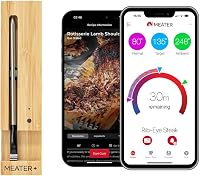
The MEATER Pro is the top of the MEATER range and aims for the same job: core and ambient readings sent to an app. It is a single-probe design, so you get one meat reading per probe unless you move up the line.
Heat limits and cleaning
The Gen2 probes are IPX8 waterproof and rated to 752 F, so they take open-flame grilling and dishwasher cleaning. That is a real advantage over a hand-wash instant read or a probe that fears the sink.
Typhur lists the probes as safe for grilling, frying, simmering, sous vide and the dishwasher. The IPX8 rating is the waterproofing standard behind that claim, and it is what lets the probe go from a hot grate to a soapy sink without a care.
The lower end of the range matters too. The Gen2 reads down to 32 F, so it can check a fridge or a cold brine as well as a hot roast.
That range covers most home cooking from thaw to sear.
The Typhur Sync Gold Dual goes further with probes rated to 932 F. If you sear steaks over a roaring fire or run a pizza oven, the higher ceiling matters; the dual system gets that rating and a carrying case.
The MEATER Pro sits at the top of its own line for heat. The MEATER range has been through several versions, and a look at the MEATER Plus vs MEATER Pro comparison shows how the heat and range ceilings step up across models.
For cleaning, the Gen2's IPX8 rating means the probes can ride in the dishwasher. The base and charging cable need a wipe, not a soak.
Typhur lists machine wash and oven safe care for the probe and a wipe clean rule for the rest of the kit.
The Dual's care notes follow the same pattern: probes go in the dishwasher, the base gets wiped. Neither Typhur needs the careful hand wash that a thermocouple instant read does.
Setup and app control
Both systems set up in minutes, but the Sync Gold gives you two control surfaces: the base and the app. The base is ready as soon as the probe is charged and the reading shows.
Typhur's app adds remote monitoring, real-time alerts and cooking guidance, with recipes and video guides. The base covers the basics so a dead phone battery does not end the cook.
The app works alongside the base rather than replacing it, so you can set a target on the device and let the phone carry the alerts. That split suits cooks who want a backup screen without a second gadget.
The MEATER Pro uses the MEATER app as its main screen. That app has had years of refinement across the line, and the MEATER Pro Duo review covers how two-probe cooks work in that ecosystem.
Charging is a factor too. A 2 minute charge on the Gen2 gives about 2 hours of cooking time, and a full charge covers 24 hours or more according to Typhur.
That fast top-up is a practical detail. If you forgot to charge before a cook, two minutes on the cable buys a whole steak session, which is more than enough for a weeknight dinner off the grill.
The Dual's extra hardware
The Dual adds Bluetooth and Wi-Fi to the Sub-1G link, so it lists all three connection types. That makes it the more flexible radio package in the family, and its listing meets CE, FCC, NIST and RoHS specifications.
It also comes with a hard case and two probes, and its outer shell is stainless steel and ceramic rather than all plastic. Those are the details that explain the higher cost of the Dual kit.
If you travel to tailgates or campsites with your cooker, the case and the sturdier build are worth weighing seriously against the Gen2 base.
Who should buy the Typhur Sync Gold Gen2
Buy the Sync Gold Gen2 if you smoke, grill in a kamado or cook in a Dutch oven and want the signal to hold. It is the best pick for long, low cooks where the lid stays shut for hours.
Six sensors per probe plus a base display suit a brisketeer who wants a predicted finish time without opening the smoker. The 752 F rating covers high-heat searing and the dishwasher handles cleanup.
The Gen2 is also the better fit if you like a standalone readout. You can glance at the base while prepping a rub and never touch your phone.
The main downside is the base itself. It is one more part to charge and keep dry, though it is small and easy to wipe.
One probe covers most single-cut cooks, which is why the Gen2 ships with one. If you start running two cuts at once, the Dual ships with two probes ready to go.
Who should look at MEATER Pro or a second probe
Pick the MEATER Pro if you are already at home in the MEATER app and cook one cut at a time. It is the top model in that line and the app-first workflow is familiar to plenty of grillers.
The MEATER Pro also suits cooks who want a single, tidy probe and phone control without a separate base. If your cooks are steak, chicken and small roasts, the extra sensor count of the Gen2 buys less than it would for brisket.
When two cuts matter, the MEATER Pro Duo is the one to check. The Typhur Dual covers the same job with 932 F probes and a case, though its score is lower because the price climbs faster than the extra value.
The Dual lists a 0.5 second response time and the same six sensors per probe as the Gen2, plus the three-way radio. If you cook brisket and a side together, that second probe pays for itself more than a higher heat ceiling does.
If you want a fast instant read for spot checks rather than a wireless log, the Maverick Pro-Temp is the pick. It is NSF approved, NIST accurate and folds into a compact unit, and it is best for quick spot checks between cooks.
When a thermocouple still earns its place
The Maverick PT-100BBQ uses a Type K thermocouple and reads from -40 F to 450 F with a backlit LCD. Its 5 inch probe is built for stabbing a roast and getting a number, not for logging a cook.
It is IP44 water resistant, which means splash proof rather than dishwasher safe, and it needs hand washing and air drying. It runs on two AA batteries and folds down to a 7.4 inch by 2.2 inch package.
Use it as a second tool rather than a rival to either wireless probe. It confirms the reading when you open the lid, then goes back in the drawer while the wireless probe keeps logging.
Verdict: which smart probe wins
The Typhur Sync Gold Gen2 wins this matchup for most home grillers, and the strongest reason is its Sub-1 GHz signal plus base display. In any head-to-head of Typhur Sync Gold vs MEATER Pro, the probe that holds its link and shows a reading without a phone is the safer buy.
Pick the Gen2 for smokers, kamados and Dutch ovens, for long low cooks, and for anyone who wants five internal sensors per probe. It earns its higher score on the specs that matter most at the grill.
Pick the MEATER Pro if you cook one cut at a time and the MEATER app is already part of your routine, or if you want the simpler phone-only kit. For two cuts, compare the Duo against the Typhur Dual before you decide.
Either way, the next thing worth reading is MEATER Plus vs MEATER SE if you are weighing a cheaper MEATER model against the top one. The signal and sensor gap is what you would be giving up.
Frequently asked questions
Does the Typhur Sync Gold need a phone to work?
No. The Sync Gold base shows readings and lets you set target temperatures on its own.
The Typhur app adds remote monitoring and alerts, but a cook can run the whole cook from the base if they prefer.
How many probes do you need for a normal cook?
One probe covers a single roast, steak or chicken. Two make sense when you cook a big cut and a side together, which is what the Dual and the MEATER Pro Duo are for.
Can both systems handle high-heat grilling?
The Sync Gold Gen2 probes are rated to 752 F and the Dual probes to 932 F. The MEATER Pro is the top of its line for heat, so use whichever probe your data sheets allow over open flame.
Are wireless probes good for oven cooking too?
Yes. Sub-1 GHz and Bluetooth signals can pass through oven doors, so both systems work for oven roasts and not just the grill.
A standalone base helps when you want a glance with the oven door shut.