MEATER Plus vs MEATER SE: Which Is Better? (October 2026)
Choose MEATER Plus if you want its charger to repeat the Bluetooth signal; choose MEATER SE if you prefer its plastic charger and MEATER Link range option. Both have one dual-sensor probe and app guidance.
On this page (8 sections)
- MEATER Plus vs MEATER SE: what is the main difference?
- Does MEATER Plus or MEATER SE reach farther?
- Do both models have the same cooking features?
- Which model suits your kitchen and cooking habits?
- What should you check before pairing and cooking?
- How should you clean and store the probes?
- What common mistakes affect the comparison?
- Which should you buy, MEATER Plus or MEATER SE?
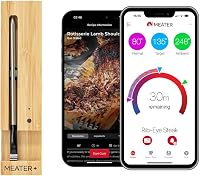
MEATER Plus vs MEATER SE comes down mainly to the charger and connection setup. Plus has a Bluetooth repeater in its bamboo charger; SE has a plastic charger and can use MEATER Link WiFi and Cloud connectivity for extended range.
Both provide one wireless probe, dual sensors and app guidance.
If you cook in a spot where the phone-to-probe connection is easy to interrupt, consider how the charger or MEATER Link will fit your setup. If you mostly cook near your phone, the choice may come down to charger preference and the features you expect to use.


MEATER Plus vs MEATER SE: what is the main difference?
The Plus charger repeats the Bluetooth signal, while the SE uses a plastic charger and offers MEATER Link WiFi and Cloud connectivity for extended range. The probes share the same basic approach: one wireless probe monitors the meat and the surrounding cooking temperature, with the MEATER app providing guidance.
That shared setup means neither model is the better choice just because it has more probes or a different cooking method. Each is a single-probe thermometer for following one piece of meat during a cook.
The distinction to weigh is how you want the signal extended, if you need extension at all.
MEATER Plus pairs its probe with a bamboo charger that includes the repeater. MEATER SE pairs its probe with a plastic charger and can use MEATER Link for extended connectivity.
For a wider look at app-connected options, our guide to smart meat thermometers explains what app features can and cannot do for your cooking routine.
Does MEATER Plus or MEATER SE reach farther?
Choose the connection method that fits the distance and obstructions between your cooking area and phone. Plus has a Bluetooth repeater in its charger, and SE supports extended range through MEATER Link WiFi and Cloud connectivity.
MEATER SE's stated average Bluetooth range is 165 ft in open air with no obstructions. Walls, floors, nearby Bluetooth or WiFi devices, and the position of your phone can change the range you get in a real kitchen or yard.
For either model, place the charger and phone where their connection has the clearest path available. If the grill or oven is in a basement, garage or far corner, think through where you can keep the phone and charger before choosing.
A published open-air range is a useful reference, but it does not map every home. Our guide to how far a wireless meat thermometer can reach explains the common factors that affect signal distance.
Do both models have the same cooking features?
Yes, both models use dual sensors and the MEATER app's guided cooking features. Each probe monitors internal meat temperature up to 212°F and ambient temperature up to 527°F, while the app provides cooking guidance, alerts and estimated times.
The app is useful when you want help planning a cook and a rest period without repeatedly opening an oven or grill to check the meat. MEATER SE also includes more than 50 masterclass recipes in the app.
Both models have one probe, so they suit cooks where one cut is the main focus. If you often cook several different cuts at once and want separate readings, compare your needs with our guide to dual-probe vs 4-probe meat thermometers.
Neither model removes the need to place the probe correctly or check that it is connected before relying on app updates. For broader advice on probe placement and cooking steps, see how to use a wireless meat thermometer.
Which model suits your kitchen and cooking habits?
MEATER Plus suits you if you want the charger to repeat Bluetooth; MEATER SE suits you if a plastic charger and MEATER Link option match your routine. Your best fit depends on where you cook, where you keep your phone and how much you value the charger design.
Choose Plus when the charger’s repeater is the feature you want built into your setup. The bamboo charger can make sense if you want that signal extension available without relying on MEATER Link as your route to extended range.
Choose SE if you prefer its plastic charger and expect to use its app guidance, recipes and MEATER Link option. Its dual sensors and core app-guided cooking functions make it a straightforward choice for cooks who do not need the Plus charger’s repeater.
Skip both if your usual cooking calls for tracking multiple cuts at the same time. A single probe can monitor one piece of meat, so a multi-probe model is a better match for a crowded smoker or a meal with several cuts that need separate readings.
Also skip either model if you do not want to use a phone app during a cook. These are app-guided thermometers, so someone seeking a simple on-device display should look at a different style.
What should you check before pairing and cooking?
Charge and pair the probe before the cook, then confirm the app receives a reading before putting the food on heat. This gives you time to resolve a pairing issue while the meal is not underway.
MEATER SE guidance says to charge for at least 2 hours before pairing, and its first-time charge guidance says 4 hours. Keep the SE probe docked in its charger when it is not in use so it can charge and be ready for the next cook.
MEATER Plus says a 5-minute charge provides 2 hours of cook time. That is useful for planning a shorter cook, but charging ahead avoids starting with a probe that has too little charge.
After pairing, place the probe as directed for the cut and cooking method, and make sure the app shows a live reading. Keep the phone in a place where it can maintain a connection, especially if an oven, grill or walls sit between it and the probe.
For model-specific steps, use our MEATER Plus setup guide. It covers the Plus pairing and use flow in more detail.
How should you clean and store the probes?
Clean the probe after every cook and return it to its charger when it is not in use. Both probes are described as dishwasher safe, while the care instructions differ in their additional cleaning guidance.
MEATER Plus care instructions also list hand washing. MEATER SE guidance recommends hot, soapy water and the rough side of a sponge for most cooks, and says to keep the probe clean and shiny.
Let the probe cool before cleaning it, and avoid leaving food residue to dry on the surface. After cleaning, dry it and dock it in its charger so the next cook starts with a stored probe.
A common mistake is to treat “dishwasher safe” as a reason to skip cleaning after a cook. Residue can remain on the probe, so inspect it and clean it each time.
What common mistakes affect the comparison?
The most common mistake is choosing by the range number alone instead of matching the connection method to your home. Open-air Bluetooth range does not account for walls, floors or nearby devices.
Another mistake is assuming that both products have the same charger because their probes share the dual-sensor design. The charger is the main hardware difference, so check whether you want the Plus repeater or the SE plastic charger.
Do not start pairing SE before charging it as directed. A low charge can interrupt pairing or cause disconnections, so prepare the probe before cooking day.
Finally, do not expect a single probe to track a full spread of food independently. Plan each cook around one primary cut, or choose a multi-probe thermometer if separate readings are essential.
Which should you buy, MEATER Plus or MEATER SE?
Pick MEATER Plus if its built-in Bluetooth repeater is the connection feature you want; pick MEATER SE if you prefer its plastic charger and MEATER Link range option. Both provide one dual-sensor probe and app-guided cooking, so let your cooking location and charger preference decide.
Choose neither if you need multiple probes or do not want app-based guidance. For another comparison centered on the Plus, read MEATER Plus vs MEATER Pro, or see our MEATER Plus review for its individual features.
Frequently asked questions
What is the difference between MEATER Plus and MEATER SE?
MEATER Plus has a bamboo charger with a built-in Bluetooth repeater, while MEATER SE has a plastic charger. Both use one wireless probe with dual temperature sensors and connect to the MEATER app for guided cooking.
The useful choice is which charger and connection setup suits your cooking area.
Does MEATER SE have the same temperature range as MEATER Plus?
Both models monitor internal meat temperature up to 212°F and ambient temperature up to 527°F. Their basic cooking range is similar, so compare the charger and connection options instead.
These shared limits cover the temperatures each probe is designed to monitor.
Can MEATER SE connect over Wi-Fi?
MEATER SE uses Bluetooth, with extended range available through MEATER Link WiFi and Cloud connectivity. That differs from MEATER Plus, whose charger has a Bluetooth repeater.
Consider where your phone will be and whether either extension method suits your home.
Which MEATER is better for cooking away from the kitchen?
MEATER Plus is a direct fit if you want a repeater built into its charger. MEATER SE can extend monitoring through MEATER Link WiFi and Cloud connectivity.
Bluetooth range can vary with obstructions and nearby devices, so your cooking location and connection path matter.
Are MEATER Plus and MEATER SE probes dishwasher safe?
Both probes are described as dishwasher safe. MEATER Plus care instructions also list hand washing, while MEATER SE care guidance includes hot, soapy water and a sponge.
Clean the probe after each cook and follow the instructions for your model.