Where to Put a Meat Thermometer in a Chicken
Put the probe in the thickest part of the breast, away from bone, and aim the tip into the center of the meat. On a whole bird, also check the thigh next to the body and the innermost part of the wing.
On this page (9 sections)
- Where do you put a meat thermometer in a whole chicken?
- Why does the spot change the reading so much?
- How deep should the probe go?
- How do you avoid hitting a bone?
- What temperature should each spot reach?
- Can you leave a thermometer in while the chicken cooks?
- What should you check on a spatchcocked or cut-up chicken?
- Which thermometer makes spot checks easier?
- How do you know the chicken is done everywhere?
To get an accurate reading, put the probe into the thickest part of the chicken and keep the tip away from bone. On a whole bird that means the deepest part of the breast and the thigh next to the body.
A reading taken next to a bone can run high and make you pull the chicken before it's safe.
The spot matters more than the thermometer. Chicken cooked to temperature in one place can still be raw near the bone or in the middle of a thick breast.
Checking two or three points gives you a true picture.
Where do you put a meat thermometer in a whole chicken?
Start with the breast, then the thigh, then the wing. Each of those spots reads differently, and the bird is done only when every one reaches the safe mark.
For the breast, slide the probe in from the top, slightly to one side of the center bone, and stop when the tip sits in the middle of the meat. For the thigh, come in from the outer side toward the center and stop short of the bone.
For the wing, aim for the innermost meaty section where it meets the body.
This is the same logic as where to place a meat thermometer in a turkey: the thickest flesh gives the slowest, most honest reading. Small birds just need a lighter hand because there's less room between the skin and the bone.
One more check worth doing on a whole bird is the area where the thigh meets the breast, close to the back. That pocket of meat is thick and well protected, so it often lags behind the rest of the bird.
Angle the probe in from the side of the body and let the tip settle in flesh before you read.
Why does the spot change the reading so much?
Bone and fat conduct heat faster than meat, so a probe resting against them reads hot. That's the most common reason a chicken looks done but is still pink near the joint.
The thickest breast also takes longer to reach temperature than the outer edges. If you only check a shallow spot near the surface, you'll read high while the center is still cool.
Aim deep.
Dark meat in the thigh is a different case. It cooks more slowly than breast meat and holds more juice, which is why many cooks check the thigh last and keep the bird in longer for it.
Both need to pass.
Heat also moves unevenly through a bird. The oven air warms the skin first, the outer meat next, and the center last.
That is why two spots less than an inch apart can give you numbers that differ by several degrees. The lower figure is the one that tells you whether the chicken is truly cooked.
How deep should the probe go?
Push the tip into the center of the meat, not just under the skin. A probe that's only partway in reads the surface temperature, which rises first.
On a large breast, that means the probe should sink about halfway through the thickest section. On a small chicken or a flattened bird, the meat is thinner, so stop as soon as the tip is centered.
Look at the depth mark on your probe stem if it has one. Those marks are a guide, not a rule, since chicken sizes vary.
Angle the probe so it follows the grain of the meat toward the thickest point.
Thin pieces are the easiest to misread. A wing or a drumstick may be only an inch thick, so there is no deep center to reach.
Slide the tip in sideways along the length of the meat so more of the sensor sits inside the flesh rather than poking out the far side.
How do you avoid hitting a bone?
Insert from the outside and feel for the tip, rather than stabbing through the middle and hoping. A small change in angle is often enough to clear the bone.
Come in near the leg joint but slightly forward, toward the meat. On the breast, move an inch away from the center bone before pushing in.
If the tip stops against something hard, pull back and re-angle.
Take a second reading a short distance from the first. When two nearby spots agree, you can trust the number.
When they don't, the lower reading wins until it catches up.
Reading the thigh without hitting bone
The thigh bone runs down the center of the leg, so a straight stab from the top will often land on it. Come in from the outer side of the thigh instead, below the hip joint and above the knee.
Angle the tip slightly toward the middle of the meat and stop as soon as it feels firm. A reading taken just off the bone is the one you want.
What temperature should each spot reach?
The breast and thigh both need 165°F (74°C), and so does the wing meat. That's the figure the USDA gives for all poultry, including whole birds and pieces.
Some cooks pull chicken a few degrees below that and let it rest, but 165°F is the safe target to check against. Dark meat fans often let thighs run to 175°F or higher for a better texture.
Keep a meat thermometer temperature chart handy so you can compare spots at a glance. It also helps when you move from chicken to pork or beef in the same cookout.
If two spots disagree at the end of the cook, trust the lowest number. A breast that reads 168°F while the thigh reads 160°F is not done, even though the average looks fine.
Give the bird more time and check the thigh again.
Can you leave a thermometer in while the chicken cooks?
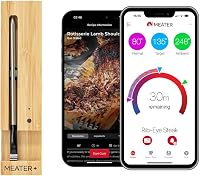
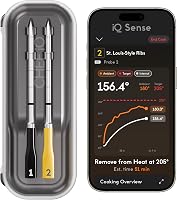
Yes, if the thermometer is built to stay in the oven. A wireless leave-in probe sits in the thickest part of the breast for the whole cook and sends readings to a display.
That setup removes the guesswork of opening the oven door to check. It also lets you watch the thigh come up to temperature while the breast is already close.
Just confirm the probe's oven rating before you use it. Our guide to putting a wireless meat thermometer in the oven covers how that works and what to watch for.
If you prefer an instant-read model, probe near the end of the cook and again after resting. Either way, the placement rules above don't change.
A leave-in probe also helps with the thigh problem. You can park it in the thickest part of the breast from the start, then use a handheld unit to spot check the thigh near the end.
That way you are not opening the door just to watch the breast creep toward temperature.
What should you check on a spatchcocked or cut-up chicken?
Check the same thick spots, but reach them from the top. A flattened chicken puts the breast and thigh on one level, so the probe goes in vertically.
For cut pieces, check each piece separately. A thick breast half needs its own reading, and so does each thigh.
Small wings and drumsticks cook fast, so test them early.
Don't judge a tray of pieces by one probe. The pieces closest to the heat source will be done first.
Rearrange them and recheck the cooler ones.
Cut-up chicken also dries out faster than a whole bird. A piece that hits 165°F early will keep climbing if it stays on the heat, so pull finished pieces to a plate and cover them while the rest catch up.
Check each one again before serving.
Which thermometer makes spot checks easier?
A fast-read thermometer helps most, because you can test several spots before the oven cools. Two to three seconds per reading is quick enough to check breast, thigh and wing in one go.
The Lavatools Javelin PRO Classic reads in 2 to 3 seconds with an accuracy of ±0.5°F after lab calibration. Its 2-inch display rotates to match how you hold it, which helps when you're reaching into a hot oven at an odd angle.
The motion-activated backlight means a simple shake lights it up, so you can read the number with gloves on. It is IP65 water resistant and NSF certified for commercial kitchens.
The TempPro TempSwift reads in 1 second and has a 4.3-inch probe that reaches deep into a large bird. Its lock function holds the reading after you pull it out of the heat.
The display rotates too, and the foldaway probe stores flat. For cleaning, run the probe under water before you wipe it down.
Whichever you choose, check the spot, not just the thermometer. For oven use and safe leave-in options, compare oven safe meat thermometer picks before you buy.
How do you know the chicken is done everywhere?
Every spot you check needs to reach 165°F, and the juices should run clear when you pierce the thickest part. If one area reads low, put the bird back in and test it again in a few minutes.
Let the chicken rest for a few minutes before carving. The temperature will climb a little as it sits, which gives you a cushion.
Then carve and check the thickest slices one more time if you want to be sure.
The same placement habits carry over to other poultry and roasts. Once you know where to put a meat thermometer in a chicken, checking a turkey or a duck becomes a matter of reaching the thickest meat and staying off the bone.
For a wireless setup that tracks the whole cook, see best wireless meat thermometers before your next roast.
Frequently asked questions
Can I leave a meat thermometer in the chicken while it roasts?
Only if the thermometer is rated to stay in the oven. A wireless or leave-in probe can sit in the bird for the whole cook, while an instant-read model goes in for a few seconds near the end.
Check the temperature in more than one spot either way.
What should I do if the chicken hits temperature in one spot but not another?
Keep cooking and check the cooler spot again in a few minutes. The bird is only done when every measured point reaches the safe temperature, so the slower area needs more time in the heat.
Does a meat thermometer read wrong when the tip touches bone?
Yes. Bone heats faster than meat, so a reading taken against it can run high and trick you into pulling the chicken early.
Slide the probe a little deeper or sideways so the tip sits in flesh.
How do I read a chicken thigh without hitting the bone?
Come in from the outside of the thigh, near the leg joint, and angle the tip slightly toward the center of the meat. Stop before it meets resistance from the bone, and take a second reading a short distance away.
Can I check a whole chicken by inserting the thermometer through the cavity?
That's not reliable. The cavity wall is thin, and the probe tip can land against a bone or in the gap.
Insert from the outside into the thick breast and thigh instead.
Is a spatchcocked chicken checked the same way?
Yes. A flattened bird still needs a reading in the thickest breast and thigh, but the spots are easier to reach.
Lay it skin side up and slide the probe in from the top.