When to Insert a Meat Thermometer While Cooking
Insert a meat thermometer when a thick cut is about 75% through its estimated cooking time, so the reading tracks the finish without opening the lid repeatedly. For thin cuts like steaks and chops, wait until the last few minutes, when the meat is nearly done.
On this page (9 sections)
- When should you insert a meat thermometer into a large roast?
- When is the right moment for steaks and chops?
- How do you time checks in a smoker or low oven?
- How does carryover heat change when you should check?
- Which thermometer fits each checking style?
- Where do you place the probe for an accurate reading?
- Can you leave a probe in the oven?
- What temperatures should you check against?
- When should you check the temperature in practice?
Insert a meat thermometer when a thick cut is about 75% through its estimated cooking time, so the reading tracks the finish without opening the lid over and over. For thin cuts like steaks and chops, wait until the last few minutes, when the meat is nearly done.
The right moment depends on what you're cooking and how you plan to check it.
Timing matters because every lid opening loses heat and slows the cook. A thermometer used at the right point gives you a useful reading without dragging out the cook.
When should you insert a meat thermometer into a large roast?
Start checking a large roast when it's roughly three-quarters of the way through the time you expect. A 4 lb pork shoulder that needs about 4 hours gets its first check around the 3-hour mark.
That leaves room to adjust without rushing the finish.
Large cuts cook slowly and evenly, so an early check tells you whether the oven or smoker is running hot or cold. Use that reading to adjust the temperature setting rather than to decide the meat is done.
For an oven roast, open the door only when you need to, slide the probe into the thickest part, and close it again. A leave-in probe that stays in the meat the whole time avoids that door opening altogether.
The probe's tip needs to sit in the center of the thickest section, not near the surface or against bone.
If you're roasting a whole bird or a bone-in cut, the same three-quarter rule applies. The thickest part is the last to reach temperature, so that is where the first reading counts most.
A second check a little later confirms the rise is steady.
When is the right moment for steaks and chops?
Wait until the meat is nearly done, usually in the last 2 to 3 minutes for a steak. Thin cuts cook fast and lose heat quickly, so checking too early tells you little.
By the time the surface is browned and the meat feels firm, the center is close to target.
A 1-inch steak cooks in about 4 to 6 minutes per side over high heat. Check after the first side is done and the second is nearly finished.
Then pull it when the internal temperature is a few degrees below your goal, since carryover heat finishes the job during rest.
Chops behave the same way. A 1-inch pork chop needs about 4 minutes per side over direct heat.
Check near the end, and keep the probe away from bone, which heats faster than meat.
Thin cuts also punish slow thermometers. A probe that takes several seconds to settle leaves the grill open longer and lets heat escape.
A fast read keeps the lid closed and the cook on schedule.
How do you time checks in a smoker or low oven?
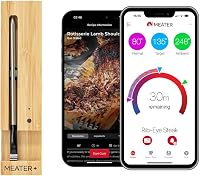
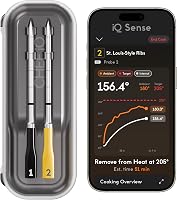
For a long smoke, insert a leave-in probe at the start and let it monitor the whole cook. A wireless unit reads outside the smoker, so you don't open the lid to check.
That keeps the chamber temperature steady and the cook moving.
For spot checks on a long cook, begin around 75% of the expected time. A brisket that needs 12 hours gets its first check around hour 9.
A pork butt on an 8-hour plan gets checked around hour 6.
The stall, when the internal temperature plateaus for an hour or more, is normal on large cuts. Don't crank the heat or open the lid constantly to fight it.
Let the probe report and keep the smoker steady. Wrapping the meat at the stall is a common way to push through it, but the decision should come from your plan, not from panic over a flat reading.
Low ovens behave like smokers here. The heat is gentle and the cook is long, so a probe that stays in place gives you more useful data than repeated door openings.
Start early with a leave-in probe and let the numbers come to you.
How does carryover heat change when you should check?
Check the temperature before resting, then plan for a few degrees of rise during the rest. Meat keeps cooking after it leaves the heat, so pull it slightly below your target.
A large roast can climb 5 to 10°F while it rests under foil.
For steaks and chops, pull about 5°F below the goal and rest 5 to 10 minutes. For a whole bird, pull when the thigh reads a few degrees below target and rest it loosely covered.
A leave-in probe makes this easier because you can watch the temperature during the rest. A quick-read check before and after the rest confirms the meat reached its target.
The rest is also when the juices redistribute, so slicing early costs you moisture as well as a clean final reading.
Which thermometer fits each checking style?
The moment you check depends on whether you're spot-checking or monitoring. An instant-read suits thin cuts and quick checks.
A leave-in probe suits roasts and long smokes. Pick the tool to match the cook.
Best for quick spot checks on steaks and chops
The ThermoMaven 0.5 Sec Professional Meat Thermometer Digital reads in about 0.5 seconds, so you can check a steak and close the grill fast. Its ±0.5°F NIST-certified accuracy gives you a reading you can trust when the window is short.
The auto-rotating display and backlight help when you're checking at dusk. It's IP67 waterproof and folds for storage with a hook and magnet.
Best for long smokes with no app
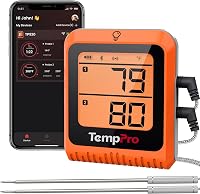
The ThermoMaven 3000FT No-App monitors from up to 3000 feet with Sub-1G wireless and no app or sign-up. Two thin probes let you watch a brisket and a pork butt at once, and the base has a large LCD.
Its probes are NIST certified with ±0.5°F accuracy and handle heat up to 752°F. That makes it a strong fit for smoker cooks where you set a target and walk away.
Best for oven roasts with app alerts
The Govee WiFi 4-Probe sends alerts to the Govee Home App when a temperature goes outside your presets. Four food-grade probes let you monitor several dishes at once, and the 3000mAh battery lasts up to 40 hours.
Its range runs 32° to 572°F with ±1.8°F accuracy. For a holiday oven full of a roast and sides, the multi-probe setup and alerts are the reason to pick it.
Where do you place the probe for an accurate reading?
Put the tip in the thickest part of the meat, away from bone, fat and griddle. Bone conducts heat faster and can give a false high reading.
Fat also reads hotter than the meat around it.
Aim for the center of the thickest section.
For a whole bird, check the thigh and the breast separately. For a roast, go in from the side so the tip sits in the middle rather than near the surface.
If the meat is thin, insert from the side to reach the center without hitting the pan.
Probe depth matters as much as timing. Our guide to how deep to insert a meat thermometer covers the depth for each cut so the tip reaches the true center.
Can you leave a probe in the oven?
Yes, a leave-in probe with an oven-safe cable or a wireless unit can stay in the meat during oven cooking. The probe sits in the meat while the cable runs out to the display or the wireless unit sends readings to your phone.
An instant-read thermometer isn't built to stay in the oven, so it's for spot checks only.
Check that the probe and cable are rated for your oven's heat before relying on them. Our guide to putting a wireless meat thermometer oven setup together covers what to check and how to route the cable.
A leave-in probe also saves you from opening the door to read it, which keeps the oven temperature from dropping on a long roast.
What temperatures should you check against?
Match the moment you check to the target temperature for that meat. Beef steaks are often pulled at medium-rare to medium, while poultry needs a higher finish.
Pork and ground meat each have their own safe targets.
A chart helps you know what number to aim for before the probe goes in.
Use a meat thermometer temperature chart to set your pull temperature, then check slightly before it and let carryover finish the cook. An oven safe meat thermometer with a leave-in probe makes that final stretch easier to watch without opening the door.
When should you check the temperature in practice?
Insert a meat thermometer when a thick cut reaches about 75% of its expected time, and wait for the last few minutes on thin cuts. Pull slightly below target and let carryover heat finish the job.
Pick a quick-read tool for steaks and chops, and a leave-in probe for roasts and long smokes. That combination keeps the lid closed and the reading honest.
Frequently asked questions
Can I leave a probe thermometer in the meat for the whole cook?
Yes, for oven and smoker cooking a leave-in probe can stay in the meat from the start, and its cable runs out to the display. Leave-in probes are made for long cooks, while an instant-read thermometer is meant for spot checks.
Should I insert a thermometer before or after the meat rests?
Check the temperature before resting, then check again after 5 to 10 minutes of rest. Carryover heat can push the internal temperature up a few degrees, so pull the meat slightly below your target and let it finish while it rests.
Does inserting a thermometer early make the meat dry out?
A single clean probe puncture loses almost no juice, so one early check on a large roast is fine. Repeated poking or jabbing with a thick probe does release juice, so plan your checks and use the narrowest probe you have.
Where do I put the thermometer in a whole chicken or turkey?
Place the tip in the thickest part of the thigh, away from bone and the cavity, and confirm the breast separately if your thermometer allows. The thigh is the slowest part to cook, so it gives the most useful reading for doneness.
Can I check temperature through the oven door?
No. Open the door, slide the probe in, and close it again, or use a leave-in probe with a cable or wireless unit that sends readings outside the oven.
An instant-read needs the door open to reach the meat.